
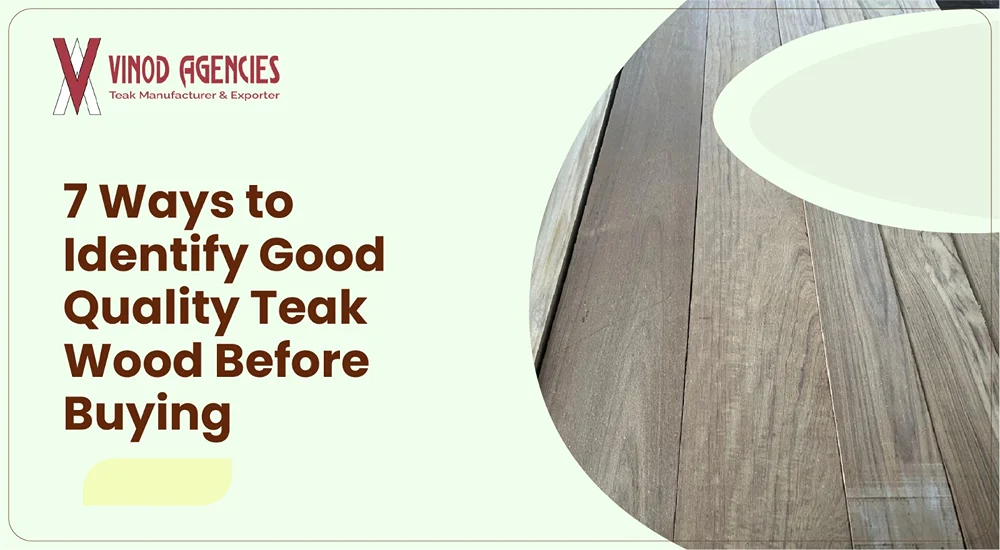
Choosing good quality teak wood requires more than checking its colour or appearance. For furniture manufacturers, architects, interior designers, timber traders, builders, and international buyers, teak wood quality can directly influence durability, dimensional stability, appearance, processing performance, and long-term value.
Whether you are purchasing teak logs, teak lumber, decking, or other teak products, knowing what to inspect before buying can help you avoid inconsistent material and select high quality teak wood suited to your application.
This guide covers seven practical checks buyers can use when evaluating teak wood.
What Defines Good Quality Teak Wood?
Good quality teak is generally assessed through a combination of its wood characteristics, grade, grain, moisture condition, dimensions, defects, processing, and source.
Teak is valued for its natural durability, dimensional stability, attractive grain, and natural oils. However, not every piece of teak will have identical characteristics.
Quality can vary depending on the tree, log characteristics, grade, sawing method, drying process, and intended application.
For this reason, buyers should evaluate the complete specification rather than relying on a single visual characteristic.
7 Checks for Teak Wood Quality Before Buying
1. Examine the Grain Pattern
Grain is one of the easiest characteristics to inspect when assessing teak wood quality.
High quality teak wood generally has an attractive, well-defined grain. Depending on how the timber is sawn, the grain may appear straight, interlocked, or show other natural patterns.
For premium furniture and architectural applications, consistent grain can be particularly important because it affects the final visual appearance.
What to check:
- Grain consistency
- Grain orientation
- Natural figure
- Excessive irregularity
- Matching requirements for the project
Quarter sawn teak, for example, can provide a relatively straight and structured grain appearance and is often considered for premium applications where grain orientation and dimensional performance matter.
2. Check the Colour and Natural Oil Content
Teak is commonly recognised for its warm golden-brown to medium-brown appearance. Freshly processed teak may have a different tone from aged or finished wood.
Natural oils are another important characteristic of teak. They contribute to its reputation for durability and resistance to moisture and environmental exposure.
However, colour alone should never be used to determine whether teak is genuine or high quality.
Different teak sources, ages, growing conditions, and finishing processes can influence appearance.
Buyer tip: Evaluate colour together with grain, density, grade, defects, moisture content, and documentation.
3. Evaluate Density and Overall Wood Condition
Density can provide useful information when evaluating timber, although it should not be treated as the only measure of quality.
Good quality teak should feel substantial and structurally sound for its intended application. Buyers should look for timber that is free from significant deterioration, excessive defects, or signs of improper storage.
For large commercial orders, ask the supplier about applicable technical specifications rather than relying only on the feel or weight of a sample.
This is particularly important when sourcing teak lumber for furniture, construction, marine, or architectural applications.
4. Check for Knots, Cracks and Other Defects
Defects can affect the appearance, workability, strength, and usable yield of teak wood.
Before purchasing, inspect samples or photographs for:
- Large or loose knots
- End cracks
- Surface checks
- Splits
- Excessive sapwood
- Insect damage
- Warping
- Uneven surfaces
- Mechanical damage
The acceptable level of defects depends heavily on the required grade and end use.
For example, premium furniture components may require stricter visual selection than applications where some natural variation is acceptable.
5. Verify Moisture Content and Drying
Moisture content is an important consideration when buying teak lumber or other processed teak products.
Improperly dried timber can experience movement, cracking, warping, or dimensional changes after installation, particularly when environmental conditions change.
For projects requiring dimensional stability, ask the supplier about:
- Drying method
- Moisture content
- Kiln-drying process
- Storage conditions
- Intended installation environment
Kiln dried teak can be particularly relevant for furniture, interiors, architectural millwork, and other applications where controlled moisture content is important.
The appropriate moisture specification should be determined according to the destination climate, product dimensions, application, and manufacturing requirements.
6. Confirm the Teak Grade and Specifications
One of the most important aspects of purchasing teak is understanding the grade being offered.
For teak lumber, buyers may encounter specifications such as FEQ (First European Quality) and MEQ (Middle European Quality), depending on the supplier and market.
Grade specifications can relate to factors such as:
- Appearance
- Defect tolerance
- Board quality
- Dimensions
- Usable yield
- Intended application
Don’t compare two teak products solely on price without comparing their grade and specifications.
For international procurement, clearly document the required teak grade, dimensions, tolerances, moisture content, and quality requirements before placing an order.
7. Verify Source, Certification and Supplier Credentials
The source of your teak matters, particularly for international buyers and businesses with responsible sourcing requirements.
When evaluating teak wood exporters in India, ask for information about:
- Country and source of timber
- Applicable certification
- Chain of Custody documentation
- Product specifications
- Processing capabilities
- Export experience
- Quality control procedures
For buyers looking for responsibly sourced timber, FSC certified teak can be an important specification.
FSC certification provides a framework for responsible forest management and supply-chain traceability. Buyers should verify the certification claim applicable to the specific product rather than relying on a general “FSC certified” statement.
How to Choose High Quality Teak Wood for Different Applications
The definition of high quality teak wood depends on where and how it will be used.
Teak for Luxury Furniture
Furniture manufacturers may prioritise:
- Attractive grain
- Consistent colour
- Appropriate grade
- Dimensional stability
- Workability
- Low defect levels
Quarter sawn teak can be considered where a more structured grain and dimensional performance are desired.
Teak for Marine Applications
Marine projects generally require attention to durability, moisture exposure, grain, dimensions, and processing.
Teak decking and marine-grade teak components should be specified according to the project’s technical requirements.
Teak for Interior Design
For cabinetry, wall panelling, doors, furniture, and architectural interiors, visual consistency can be especially important.
Buyers should evaluate grain matching, colour consistency, veneer or lumber specifications, moisture content, and finishing requirements.
Teak for Construction and Structural Applications
For construction applications, buyers should place greater emphasis on dimensions, grade, structural requirements, defects, moisture condition, and project-specific specifications.
How to Verify a Teak Wood Supplier Before Buying
Even high-quality timber can create procurement problems if the supplier cannot provide consistent specifications or documentation.
Before placing a bulk order, consider requesting:
- Product samples
- Detailed specifications
- Grade information
- Moisture specifications
- Certification documents where applicable
- Product photographs
- Packing and shipping details
- References or relevant export experience
For international buyers, it is also useful to confirm whether the supplier can meet destination-market documentation and shipping requirements.
Conclusion
Identifying good quality teak wood requires a complete evaluation rather than relying on colour, weight, or appearance alone. Grain pattern, natural characteristics, defects, moisture content, grade, processing, source, and certification all contribute to making an informed purchasing decision.
For furniture manufacturers, architects, marine professionals, construction companies, and international buyers, the right teak specification should always be based on the intended application and project requirements.
Vinod Agencies supplies a comprehensive range of teak products from India, including teak lumber, logs, veneer, decking, plywood, scantlings, and post squares. With FSC-certified teak sourcing and international supply capabilities, Vinod Agencies supports buyers looking for reliable teak solutions for furniture, marine, architectural, construction, and interior applications.
For your next teak requirement, buyers can discuss the required grade, dimensions, processing, certification, quantity, and application with Vinod Agencies to identify the appropriate product specification.
Frequently Asked Questions
How can I identify high quality teak wood?
Check the grain, colour, natural characteristics, density, defects, moisture content, grade, source, and certification. Evaluating several characteristics together provides a more reliable assessment than judging teak by appearance alone.
Is darker teak wood better quality?
Not necessarily. Darker colour does not automatically indicate higher quality. Buyers should evaluate grain, grade, defects, moisture condition, source, and other technical characteristics.
What should I check when buying teak lumber?
Check the lumber’s grade, dimensions, grain, defect tolerance, moisture content, drying process, certification, and supplier documentation. Your intended application should determine the required specifications.
Is FSC certified teak better quality?
FSC certification primarily relates to responsible forest management and supply-chain requirements. It should not be treated as a standalone measure of physical timber quality. Buyers should evaluate certification separately from grade, moisture, dimensions, and material quality.
How do I choose a reliable teak wood supplier in India?
Look for suppliers that can provide clear product specifications, appropriate certification documentation, consistent quality, processing capabilities, samples, and reliable export support.