
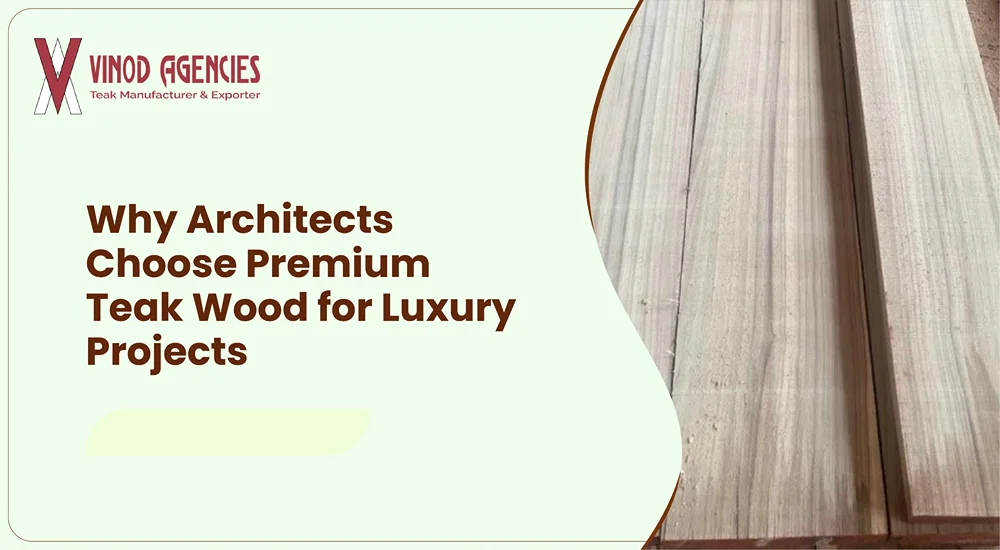
When architects select materials for luxury residential, hospitality, commercial and marine projects, the decision is rarely based on appearance alone. The material needs to combine visual character, durability, functionality, design flexibility and long-term value.
This is where premium teak wood continues to have a strong role in architectural design. Its distinctive grain, warm natural colour, durability and versatility allow architects and designers to create spaces that feel sophisticated while using a material with established performance characteristics.
From bespoke furniture and wall panelling to doors, cabinetry, architectural joinery and marine applications, teak wood for luxury projects can provide both aesthetic appeal and practical performance.
What Makes Premium Teak Wood Suitable for Luxury Architecture?
Luxury projects require materials that contribute to the overall design rather than simply serving a functional purpose.
Premium teak wood offers several characteristics that make it suitable for architectural applications:
- Distinctive natural grain
- Warm, rich wood tones
- Natural variation and character
- Good durability
- Natural resistance to moisture
- Versatility in machining and finishing
- Suitability for interior and selected exterior applications
- Availability in different forms, grades and dimensions
For architects, these characteristics make teak more than just a construction material. It can become an important part of the project’s visual identity.
1. Natural Grain Creates a Distinctive Luxury Aesthetic
One of the primary reasons architects specify teak wood for luxury interiors is its natural appearance.
Unlike synthetic finishes designed to imitate timber, natural teak provides genuine grain variation, texture and colour. Depending on the cut and grade, architects can achieve different visual effects, from relatively straight and structured grain to more expressive patterns.
This makes architectural teak wood suitable for projects where natural materials are intended to create warmth, depth and visual sophistication.
Teak can be incorporated into:
- Feature walls
- Wall panelling
- Doors
- Cabinetry
- Ceilings
- Stair components
- Bespoke furniture
- Architectural joinery
2. Durability Supports Long-Term Luxury Projects
Luxury architecture is generally designed around long-term value rather than short-term trends.
Teak wood is naturally durable and has traditionally been used in demanding environments, including marine applications. Its natural oils and physical properties contribute to its resistance to moisture and help it perform in applications where other timber species may require greater protection.
For architects, this durability can be particularly relevant when specifying timber for high-use areas, premium furniture, doors, architectural joinery and selected outdoor applications.
However, performance still depends on the grade, dimensions, moisture condition, installation method, finishing system and environment. Choosing the right specification is therefore essential.
3. Teak Wood Offers Design Flexibility
A major advantage of premium teak timber is its ability to work across different design styles.
Architects can specify teak for contemporary interiors where clean lines and natural textures are required, or for traditional and heritage-inspired projects where richer timber detailing is appropriate.
Different processing methods and cuts can also influence the final appearance.
For example, quarter-sawn teak can provide a more structured grain appearance and can be particularly relevant where dimensional stability and grain orientation are important. Teak veneer offers another option for achieving a natural teak surface across furniture and larger interior elements. Vinod Agencies supplies teak veneer for applications including cabinetry, wall panelling, doors and architectural interiors.
4. Premium Teak Wood Works Across Multiple Applications
Architects do not have to restrict teak to one element of a project. Its versatility allows the material to create visual continuity across different spaces.
Luxury Residential Projects
Premium teak wood can be used for:
- Entrance doors
- Wall panelling
- Built-in furniture
- Kitchen and wardrobe cabinetry
- Stair components
- Decorative joinery
- Bespoke furniture
Hospitality Projects
Hotels, resorts, restaurants and premium commercial spaces can use teak for reception areas, furniture, doors, feature walls and interior detailing.
Commercial Interiors
Architectural teak wood can introduce warmth into offices, executive spaces, private clubs and high-end retail environments.
Marine and Yacht Projects
Teak remains an important material in marine applications because of its durability and moisture-resistant characteristics. Vinod Agencies supplies teak products including lumber and decking for marine and yacht building.
5. Teak Can Be Matched to Different Project Requirements
Not every luxury project requires exactly the same teak specification.
Architects and project procurement teams can consider factors such as:
- Teak grade
- Grain pattern
- Sawing method
- Board dimensions
- Thickness
- Moisture content
- Surface finish
- Application
- Required quantity
- Certification requirements
For example, FEQ teak lumber is generally selected when visual consistency and premium appearance are important, while MEQ teak lumber can provide a practical option for larger commercial requirements where some natural variation is acceptable.
This allows architects to specify premium teak wood according to the project’s actual performance and aesthetic requirements, rather than treating every application identically.
6. FSC Certified Teak Supports Responsible Material Selection
Sustainability has become an increasingly important consideration when architects and developers specify natural timber.
For projects with responsible sourcing requirements, buyers can consider FSC certified teak wood and verify the relevant certification and Chain of Custody information with the supplier.
According to FSC, the FSC 100% label identifies products made from 100% virgin material from FSC-certified forests.
For architects working on international projects, specifying certified timber can also support project-level procurement and sustainability objectives where applicable.
Vinod Agencies supplies FSC-certified teak products and provides information for buyers evaluating certified teak for furniture, architectural and international applications.
7. Premium Teak Wood Adds Long-Term Material Character
Luxury design often aims to create spaces that remain visually relevant for years rather than relying exclusively on short-lived trends.
Natural teak develops character as it ages. Its grain, texture and colour can contribute to a sense of warmth and permanence that is difficult to reproduce with printed or synthetic wood finishes.
This makes teak particularly relevant for architects designing high-end projects where material longevity and natural character are part of the design concept.
How Architects Should Select Teak Wood for a Luxury Project
Before specifying teak wood, architects and procurement teams should evaluate more than the appearance of a sample.
Consider the intended application
Determine whether the teak will be used for furniture, panelling, doors, decking, cabinetry, joinery or another application.
Specify the appropriate grade
FEQ, MEQ and other specifications can be selected according to appearance, application and project requirements.
Confirm dimensions
For large projects, dimensions and tolerances should be established before procurement to ensure the material is suitable for manufacturing and installation.
Check moisture specifications
Kiln-dried teak can be specified where controlled moisture content is required for the intended application.
Discuss finishing requirements
The desired surface appearance, coating and maintenance approach should be considered during material selection.
Verify certification
If FSC-certified timber is required, request the supplier’s current certification and applicable Chain of Custody information.
Why Source Premium Teak Wood from an Experienced Manufacturer?
For architects and project buyers, the quality of the supplier is an important part of material selection.
An experienced teak wood manufacturer in India can provide greater clarity around grading, processing, dimensions, drying, product availability and export requirements.
Vinod Agencies operates a 60,000 sq. meter processing facility in Nagpur and supplies teak products including FEQ and MEQ lumber, logs, decking, veneer, plywood, post squares and scantlings. Its products serve furniture, architectural, construction and marine applications in international markets.
For large projects, working directly with a manufacturer can also make it easier to discuss specifications and bulk requirements before placing an order.
Conclusion
Premium teak wood continues to be a valuable material for architects because it brings together natural beauty, durability, versatility and a distinctive sense of material character.
From luxury interiors and bespoke furniture to architectural joinery, hospitality spaces and marine projects, teak wood for luxury projects can be specified in different grades, cuts and formats according to the application’s requirements.
For architects, designers and international buyers, the key is not simply choosing teak, but selecting the right teak grade, dimensions, processing, moisture specification and sourcing credentials for the project.
Planning a luxury project with premium teak wood? Share your application, specifications and quantity with Vinod Agencies to discuss the appropriate teak product for your requirements.
Frequently Asked Questions
Why do architects choose premium teak wood for luxury projects?
Architects choose premium teak wood for its natural grain, warm appearance, durability, versatility and suitability for high-end furniture, interiors, architectural joinery and selected exterior applications.
What makes teak wood a premium architectural material?
Teak combines distinctive natural aesthetics with durability and versatility. It can be processed into lumber, veneer, decking and other formats for different architectural applications.
Is teak wood suitable for luxury interiors?
Yes. Teak wood is commonly used for luxury furniture, wall panelling, cabinetry, doors, ceilings and architectural joinery where natural timber character is desired.
Which teak grade is suitable for luxury architectural projects?
The appropriate grade depends on the application and visual requirements. FEQ teak lumber is generally selected for premium visual applications where grain consistency and appearance are important.
What should architects consider before specifying teak wood?
Architects should consider the application, grade, grain, dimensions, moisture content, processing, finishing requirements, certification and quantity required for the project.